
14 лучших мужских часов на солнечной батарее 2021
Некоторые из наиболее впечатляющих достижений в области технологий, по иронии судьбы, основаны на опыте прошлых лет, а солнечные часы – прекрасный пример того, как их старые модели подверглись серьезной модернизации.
Впервые завоевав широкую популярность в Японии, часы на солнечных батареях распространились с тех пор по всему миру, заняв свое место в современных списках востребованных аксессуаров.
Несмотря на то, что они предназначены и, безусловно, отлично подходят для повседневного использования, часы на солнечных батареях также пригодятся любителям спорта и активного отдыха. Поскольку механизм не требует батареек, вам не придется больше беспокоиться о внезапной остановке; более того, дополнительные функции утверждают, что вам также не потребуется настройка часов в соответствии с переходом на летнее время или смены часового пояса.

Что касается внешнего вида и защиты, то часы, работающие на солнечной энергии, в большинстве выполнены из прочной нержавеющей стали и рассчитаны на долговечность, независимо от поставленной задачи.
Использование солнца для удобства определения текущего часа вне зависимости от времени суток, безусловно, не является новаторской идеей, но современные мастера и инженеры использовали нечто большее, чем просто солнечный источник питания в нержавеющей стали: они позволили своему воображению создать настоящий шедевр.
Мы, безусловно, прошли долгий путь с первых дней существования солнечных часов, и сегодня современная их технология батарей дает пожизненную гарантию, непревзойденную другими механическими или кварцевыми аксессуарами. Как и люди, разработавшие их, часы на солнечной энергии – это изобретение, которым мог бы гордиться такой гений, как Леонардо да Винчи.
Citizen Eco Drive One Solar Powered


Бренд Eco-Drive отличается элегантным внешним видом, который нам так полюбился в компании Citizen, а также его высокой прочностью. Благодаря ремешкам из крокодиловой кожи, циферблату из сапфирового стекла и возможности подзарядки от любого источника света, они станут отличными повседневными часами на солнечных батареях для любого мужчины.
Casio Pag240 1cr Pathfinder Triple Sensor Solar


Если вам нужны прочные мужские часы, обратите внимание на спортивный вариант Pathfinder Triple Sensor на солнечной батарее. Они очень функциональны и способны показывать температуру, влажность воздуха, текущую высоту и даже указать направление с помощью встроенного удобного компаса. Они станут отличным дополнением к арсеналу любого туриста, а также включают в себя пять будильников для тех, кому требуется максимальная точность.
Casio Pag240t 7cr Pathfinder Triple Sensor Stainless Steel


Для более классического вида, но с аналогичной функциональностью, как у спортивных моделей, обратите внимание на Casio PAG240T-7CR. Они также оснащены технологией тройного датчика заменяющие барометр и высотомер, а также имеют низкотемпературную устойчивость корпуса, что делает их идеальными для местности с более низкими температурами.
Для путешественников по всему миру они оснащены 31 часовым поясом, до 48 городов и полным календарем. Титановый браслет этих мужских часов на солнечной батарее обязательно произведут впечатление на зрителей.
Seiko Blue Dial Blue Nylon Strap

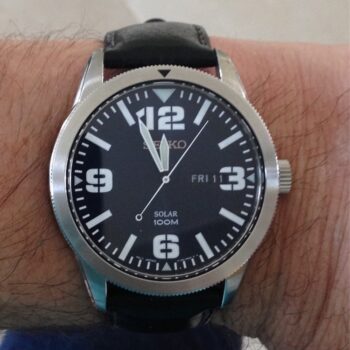
Для тех, кто ищет удобный, непринужденный подход к повседневному мужскому стилю, часы с синим циферблатом от Seiko обладают всеми функциями коллекции Seiki на солнечных батареях, но в новом смелом дизайне.
Casio Sport Combination


Мужские часы Solar Sports Combination от Casio сочетают в себе некоторые из лучших функций спортивной коллекции, предлагая водонепроницаемость до 100 метров, полезную светодиодную подсветку с технологией послесвечения для освещения аксессуара даже в самых темных условиях, а также включают шесть языков отображения месяца даты. Благодаря энергосберегающим функциям Solar Sport способны работать на полной зарядке в течение 10 месяцев.
Casio Slim Multi Function Analog Digital


Многофункциональные мужские часы Slim solar – отличный вариант от Casio для всех, кто любит аксессуары с яркими цветами. Они оснащены кварцевым механизмом в японском стиле с аналоговым и цифровым смещением циферблата, а также способны улавливать электрическую и тепловую энергию в дополнение к своей солнечной технологии. Slim Solar Multi-Function может проработать более 10 месяцев только от аккумуляторной батареи.
Seiko Black Ion Finish Calendar Dress
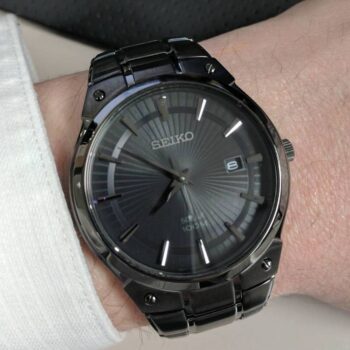
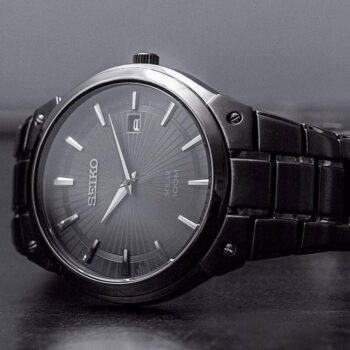
Черная ионная отделка мужских часов с календарем и солнечными батареями от Seiko – еще один элегантный и универсальный аксессуар, рассчитанный на долговечность. Гладкая поверхность обязательно привлечет внимание знакомых, она разработана с учетом стиля и долговечности.
Seiko Beige Nylon Strap Dress


Собираетесь ли вы на приятный ужин со своей второй половинкой или просто бегаете по городу по будничным делам, мужские часы Nylon Solar Dress от Seiko – универсальный и надежный аксессуар для любого случая. Он включает в себя поверхность корпуса из кристаллов для длительной защиты и удобный, хорошо сидящий нейлоновый ремешок.
Bering Time 14440 393 Collection


Мужские часы BERING Time из коллекции солнечных батарей – еще одно удобное устройство для тех, кто часто занимается активным отдыхом. Они подходят для длительных экскурсий, за счет запаса хода, позволяющие часам работать от 6 до 12 месяцев подряд, даже если они в это время не видели солнечного света. Они устойчивы к царапинам благодаря сапфировому стеклу и ремешку из телячьей кожи, делающие их таким же гладкими, как и функциональными.
Armitron Adventure Ad1001bksvgn
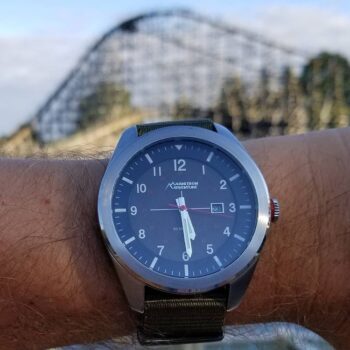

Мужские часы Armitron Adventure на солнечной батарее окрашены в армейский зеленый цвет, что делает их отличным вариантом для туристов, охотников и всех, кто предпочитает единение с окружающей средой городским джунглям. Они оснащены нейлоновым ремешком для удобства ношения и имеют диаметр 45 мм. Кроме того, они водонепроницаемы на глубине до 50 метров, что делает их функциональными даже для непродолжительного плавания.
Tissot T Touch Expert Solar


И последнее, но не менее важное: мужские часы TISSOT T-Touch на солнечных батареях, производимые в Швейцарии и разработанные для повседневного использования, кроме использования под водой. Они имеют чистый современный вид, оснащены ремешком в виде резинового ремня, а также функциями таймера и хронографа.
Citizen Bm8180 03e Eco Drive Stainless Steel
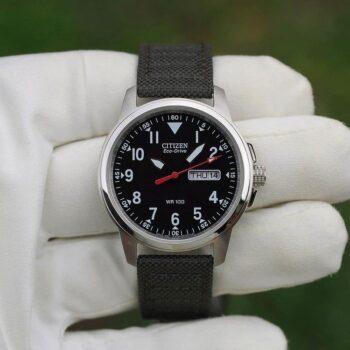

BM8180-03E – это еще одни классические мужские часы на солнечных батареях Eco-Drive от Citizen, разработанные для суровых людей, которым нравится удобное ношение на запястье. Часы выполнены в армейском стиле, украшены зеленым плетеным ремешком и узорчатой строчкой для дополнительной текстуры.
LAD Weather Automatic Solar
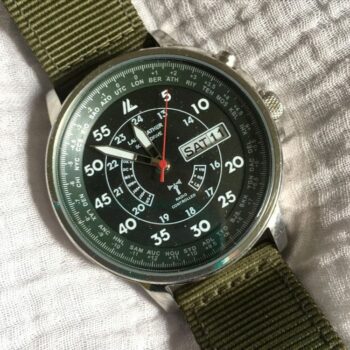

Мужские часы на солнечной батарее LAD Weather доступны в нескольких цветах, под цвет нейлонового ремешка, поэтому вы можете адаптировать свои часы к личным модным предпочтениям. Они способны принимать радиоволны от пяти станций в четырех странах и объединяет автоматический прием, коррекцию и настройки времени, а также показывают, сколько осталось заряда батареи, поэтому вы всегда будете знать, когда вам их нужно зарядить.
Seiko Ssc013 White Dial


Для роскошного подхода к повседневным мужским часам на солнечных батареях, SSC013 от Seiko предлагает высокую функциональность с великолепным кожаным ремешком и застежкой, сочетающиеся с любым нарядом. Они включают в себя функции будильника, хронографа и кварцевые механизмы с солнечной батареей, а также белый циферблат с рисунком, подчеркивающий текстуру.
A 3-Hour Commute: A close look at Moscow the Megapolis
How many people actually live in Moscow, and where does it stand compared with Seoul, New York, and Shanghai?

Little by little, the world has gone from a collection of countries into one of cities. This shift has allowed for political and economic changes to happen more quickly. Since townspeople are much closer to city hall than a country’s citizens are to the capital, a city is better equipped to understand and respond to people’s needs. Yet, as cities continue to grow, the most populous centers form metropolises, pulling entire regions into their gravitational field. Not having their own governing body, the boundaries of these urban agglomerations are abstract and unfixed. But agglomerations are now competing for financial and human resources using a variety of strategies. Urbanist Alexander Akishin, who is one of the authors of the study "Agglomeration: World Russia Moscow” , explains how Moscow differs from Tokyo and why its expanse is much larger than it seems.
THE EIGHT AGGLOMERATIONS
Urban expansionism is a direct result of industrialization. Railways, electricity, gas lamps, the telegraph, and the development of medicine — arguably any achievement of this era — have influenced population growth and the size of cities. From two, to four, to six million, 19th-century London set new records every decade. Paris, Tokyo, and Berlin followed suit. And the growth of large cities has not stopped yet: 37 million in Tokyo, 30 million in Jakarta, and 25 million in Seoul. All these cities — some earlier, some later — changed during their expansions and disregarded their existing borders.
The 2017 study "Agglomeration: World> Russia> Moscow”, conducted for the Moscow Urban Forum, was the first time in which the boundaries of Moscow’s urban sprawl and entire agglomeration were determined using international standards, which has allowed the Russian capital to be compared with other major competitors, and made it possible to answer the question of how many people are really living in Moscow. In addition, the study selected seven other metropolises: Tokyo, Seoul, Shanghai, Beijing, New York, Buenos Aires, and London. These cities are comparable in size, being among the world’s largest cities, but each demonstrates extremely different approaches to management.
WHO IS MISSED BY THE MOSCOW STATS
For Moscow, the official figures are as follows: as of 2017, the total population was recorded as 12,380,664. In 1991, by the way, there were just over nine million people. But as any Muscovite will tell you, the city is much bigger and the official statistics do not reflect the city's constant changes. Estimates of the population inside the city limits range from 10 to 15 million, while the metropolitan area could be 15 to 25 million. Such miscalculations make it impossible to prepare accurate strategic and financial documents for the distribution of budgetary funds.
12,380,664 — that's how many people live in Moscow, according to official statistics
Counting the millions of workers commuting into Moscow every morning is the first big difficulty. The second is to determine the number of inhabitants based on residency permits or a census that is not related to the day-to-day functioning of the city. Without the standard methods of evaluation adopted in different countries of the world, international comparison of metropolises is impossible. However, the methods for determining the boundaries of a metropolis are unique in many countries. In Russia, it is common to mark the boundaries of a city using concentric circles surrounding the centermost point of the city. In contrast, urban centers in France generally have a medium-sized city with dependent rural areas, which are distinguishable by their administrations.
For "Agglomeration: World> Russia> Moscow", the study followed the method used by the OECD (Organization for Economic Cooperation and Development — Ed.), which is the most common method used in international research. According to this method, each urban area has a densely populated nucleus, which has city-like features, and a periphery, which is the territory surrounding it whose inhabitants regularly commute to work in the core. The core is a continuous urban area with a population density of more than 1,500 people per square kilometer. The periphery includes all the municipalities where at least 15% of the employed population regularly travel to the core each week to either work or study. With this portion of the population routinely commuting into the core, the two areas are considered to be connected with each other both economically and socially.

Different methods for defining boundaries. Metropolitan Territory
Different methods for defining boundaries.
Different methods for defining boundaries.
Different methods for defining boundaries.
Different methods for defining boundaries.
Different methods for defining boundaries.
Standard statistics are not helpful in determining the boundaries of the core and periphery. Big data analysis can help solve this problem. This study used filtered data gathered by the three largest mobile operators in the region. Relying on this data, it was possible to create maps of the urban agglomeration and calculate the population of the municipalities connected to it for the first time. The results revealed an accurate outline of the areas in which a large portion of the population commuted to work in Moscow, and could be analyzed to see the total number of jobs in each part of the metropolitan area, as well as the metropolis’s real population.
With this analysis of Moscow's metropolitan area, the population slightly exceeds 20 million people. And its borders extend from the Moscow region to include the border areas of Smolensk, Tver, Yaroslavl, Vladimir, Tula, and Kaluga. In addition, the metropolis has 12 sub-nuclei with significant spans of 30-60 kilometers that surround Moscow.
Moscow’s metropolitan area spans over 26,000 square kilometers and has a population of over 20 million people
These sub-nuclei are cities that both attract workers from the surrounding areas and, at the same time, provide a commuting workforce to the Russian capital. The metropolitan area is almost 26,000 square kilometers, a size 10 times as large as the city’s administrative boundaries, which were were recently expanded and coined “New Moscow” in 2011, and almost 30 times the area of the city within the Moscow Ring Road that encircles the traditional city limits. Residents of the outlying areas are prepared to spend three hours traveling to the city center for work every day en masse. The scale and shape of Moscow’s metropolis are first and foremost dependent on the branches of the railway system, which are used daily by hundreds of thousands of people as the primary means of travel for those in the periphery.

The boundaries of the Moscow metropolitan area according to OECD methodology
The New York agglomeration
The Moscow agglomeration
The Beijing agglomeration
The Seoul agglomeration
The Tokyo agglomeration
The Shanghai agglomeration
THE FOUR RINGS
At the same time, the population contained in this expansive territory is very unevenly distributed. Based on population density, four consecutive zones can be identified: the center core, the periphery of the core, and the inner and outer peripheries. The core of the Moscow metropolitan area is unique: its center — the innermost ring — has been transformed into commercial districts with a limited amount of residential space. As one moves away from the city’s historic center, the density of businesses drops drastically. What’s more is that, in the area immediately surrounding the core — the second belt — there are suburbs of the city, such as Maryino, Butovo, and Mitino, as well as cities officially independent of Moscow — like Korolev, Khimki, and Reutov – that are difficult to distinguish from the suburban areas of Moscow.
The third belt – the inner periphery of the metropolis that surrounds Moscow’s A107 highway (also known as the Small Ring Road) – is almost entirely developed. The area transitions back and forth between gated neighborhoods, summer homes, and large residential complexes, which results in quite a low average population density. Finally, the fourth belt of the megacity is characterized by wilderness sporadically dotted with developments. Besides these developments, the 12 additional sub-nuclei stand out among the fourth ring’s forests. For large metropolises in other countries, it is characteristic to have the population more evenly distributed across the territory.

Population density map. Moscow
Population density map. New York
Population density map. London
Population density map. Tokyo
Population density map. Shanghai
Population density map. Seoul
Population density map. Buenos Aires
Population density map. Pekin
LIFE IN THE CENTER
Each night, the center of Moscow empties out and comes alive again at sunrise. During the day, more than 40 percent of residents go to work inside the Third Ring Road. An area of slightly less than 100 square kilometers is occupied daily by several million people. The ability to concentrate resources in just one place makes the urban economy more efficient. All these effects are developed in the metropolis to an even greater extent. However, uncontrolled growth is also fraught with major risks. In Moscow, the situation with the distribution of jobs negatively affects the quality of life of all citizens. The outskirts and periphery of the city suffer from a lack of work, which forces people to spend time and resources on the road to the office.

Map of jobs. Shanghai
Map of jobs. Moscow
Map of jobs. Seoul
Map of jobs. Buenos Aires
Map of jobs. Tokyo
And although the concentration of jobs in the center of a city is natural — similarities with Moscow’s distribution can be seen in London, Shanghai, and Seoul — the density of jobs sharply increases from the periphery to the center, while housing, on the contrary, falls sharply, and in this Moscow differs from other cities . In most of them, business centers are mixed with residential areas. Even New York’s Manhattan, despite its business image, remains a densely populated area of the city. The non-standard nature of the density distribution leads to an excessive transport load on the urban infrastructure, which can block all of the beneficial effects of a metropolis.
The best areas for both the residents and the city are those in which the residential and work functions are combined: mixed-use areas. On the agglomeration map of Moscow, they are marked by shades of yellow. Basically, these are the areas that are located where a canceled Fourth Ring Road would have been: Sokol, Akademicheckiy, and Basmanny. The quality of the environment and the optimal rhythm of life in them allows the residents to get to know each other better and promotes the formation of active local communities. Any changes in these parts of the city should occur in close dialog with the local population.

Map of the ratio of the density of jobs and housing. Beijing
Map of the ratio of the density of jobs and housing. Tokyo
Map of the ratio of the density of jobs and housing. Buenos Aires
Map of the ratio of the density of jobs and housing. Seoul
Map of the ratio of the density of jobs and housing. New York
Map of the ratio of the density of jobs and housing. London
Map of the ratio of the density of jobs and housing. Moscow
Most urban agglomerations face the problem of an excessive concentration of jobs. In such a situation, a balanced policy of urban and regional growth, at the intersection of economic and spatial planning, comes to the rescue. Some Asian agglomerations have been particularly successful in implementing such a strategy. In the metropolitan area of Seoul, over thirty years of constant planning made it possible to form several hubs equivalent to the city’s main nuclei and thereby relieve the center of the city. The Shanghai agglomeration is developing according to the 1-9-6-6 program: 1 agglomeration, 9 large satellite cities, 60 new cities, 600 main rural settlements. This development scheme is prescribed under the current master plan of the Shanghai metropolitan area, which covers 6,000 square kilometers.
The remarkable size of some megacities forces them to spend large amounts of money on planning work. Tokyo’s metropolitan area is the largest in the world, with a population exceeding 37 million people. It is also an example of a truly polycentric urban structure, whose existence is based on a nearly perfect planning system. To achieve this, up to 70,000 urban planners are involved in planning the Tokyo metropolitan area, one of the results of which is the creation of a highly-developed public transport system, linking together all areas of the city.
37 million people live in the metropolitan area of Tokyo, and its area of 10,369 square kilometers is 2.5 times less than that of the Moscow metropolitan area
Many agglomerations cope with their problems by utilizing a cluster policy, that is, by creating business cores that pertain to a specific professional orientation. The main advantage of business clusters for a city is the achievement of optimal labor productivity in them: they provide for the the possibility of centralized management of spatial and economic development. So, Seoul created five large world-class nuclei, specializing in marine logistics, finance, tourism, and polymer chemistry. In Shanghai, clusters are supported by the formation of Special Economic Zones (SEZs). These zones are mainly located on the periphery of the agglomeration, and their constituent companies specialize in specific export segments.
THE EAGERNESS OF FOOLISHNESS
Any correct decisions made in a timely fashion in the sphere of urban development can fail if the transport system does not keep up with the expansion of the city. Transportation in the metropolitan area has a trans-border character to it. Transportation, like in cities that do not take notice of administrative boundaries, must link the territories effectively, and spaces are divided by the invisible barriers of the zones over which many different municipalities and regions have responsibility. For this reason, transportation planning usually becomes the first step in inter-municipal coordination, but investing in it carries the highest price tag.
In London, the Crossrail system is currently being built, which should bring together the eastern and western agglomeration areas, pass under the city center, and in the future, perhaps, connect the northern and southeastern suburbs. The cost of this construction exceeds 15 billion pounds ($19.4 billion). In Seoul, funds from private companies have led to the construction of much-needed new branches of their metro. In return, those companies receive subsidies for the constructed facilities. Moscow managed to implement a large-scale reconstruction and launch of the MCC (The Moscow Central Circle metroline) by attracting more than 100 billion rubles ($1.7 billion) of private investment for the right to further reconstruct empty industrial zones near its new stations. The city also began the construction of the Great Metro Ring as well as new radial branches, and began to transform the system of overground routes. In this respect, the Russian capital can well be considered a model case for the successful transformation of transport infrastructure.

Transport networks of agglomerations
Transport networks of agglomerations
Transport networks of agglomerations
Transport networks of agglomerations
SEVEN WEALTHY MEGAPOLISES VS LONDON
Without a certain level of budget self-sufficiency, no city can influence the development of its own agglomeration: investments in infrastructure, culture, education, and transport are required. Adequate budget support is an important aspect of agglomeration management policies. Almost all large agglomerations have low-deficit budgets. That is, the funds collected from local taxes are usually enough to conduct an independent policy, choose priority areas for development, and finance major infrastructure projects. In this respect, out of all the chosen agglomerations, the situation is different only in London. Here, the city contributes only 37 percent of its own funds to the budget, forcing the mayor's office to negotiate co-financing every year with the national government. This is due to the specificity of the British tax system, which probably creates unnecessary stress on the development of London.
In managed agglomerations, the citizens are 7% richer than in those that are unmanaged
Moscow is a city of federal significance and is its own region in the Russian Federation. For this reason, its budget self-sufficiency is incomparable with that of other Russian cities (which frequently suffer due to the existing system of tax distribution). The inability to plan freely for the future because of small budgets prevents the adequate transformation of Russian million-population cities into centers for the development of technology, culture, education and tourism.
However, the most difficult and arguably the most fundamental issue in the research is the management and coordinated development of agglomerations. The fact is that a city cannot influence what is happening outside its borders. For example, after coordinating the schedule of intercity bus and urban transportation throughout the various parts of the metropolitan area, it was possible to use just one travel card. On the other hand, the taxation of companies and residents is important for cities. If a person lives in a small city and works in a neighboring large city, he pays taxes where he works, and spends a large part of his salary there. The city of residence does not collect budgetary revenues, but it still must provide its citizen with high-quality services.
Nearby cities often have a common infrastructure: energy, water, and transport. Often the reluctance to invest in the common infrastructure of one of the neighbors turns into an accident that affects everyone. Such effects are known as spillover effects or "overflow effects". Another fact is that the townspeople in managed agglomerations are 7% richer than in those that are not managed. So, in the long term, this promises a multi-billion dollar gain. But not everything is so simple.
In Asia, the agglomeration strategy is formed at the national level. Seoul and the surrounding areas comprise half of the population and economy of South Korea. The government of the country controls the process of growth of the capital, for which a national law was passed to restructure the mega-region. In China, not only is the development plan for Shanghai coordinated at the national level, but, for example, so is even the mega-region of the Yangtze Delta, which is home to around 100 million. On the other hand, in New York, the master plan of agglomeration has been developed for over 100 years by the non-governmental organization RPA (Regional Plan Association). And the agglomeration itself — the business capital of the world — consists of a city and parts of three states and is in no way governed by the national government. In London until recently, there was neither a mayor nor a city council — they had been abolished by the government of Margaret Thatcher. In fact, until the year 2000, the London agglomeration was an accumulation of independent regions that had the right to agree among themselves on joint activities.
Today, the Coordination Council for Transport Development is operating between Moscow and the region. In comparison with other world agglomerations, Moscow is in an unusual position: the national government does not directly interfere with its growth, nor does it form guidelines and specific goals that would influence urban policy.
There is no single effective plan for managing agglomerations. In different situations, diametrically opposite approaches are best applied. In other words, what is good for Tokyo (tens of thousands of planners) can be a disaster for New York, which has been developing for over 100 years in the absence of a state planning body.
In addition to different forms of governance, agglomerations also use their own development tools. In London, the public-private development model is preferred, as utilized in the development of the Olympic Park. In Shanghai, an industrial holding company with a capitalization of over $40 billion has been created, solving city problems in various industries — from construction to the supply of raw materials or pharmaceutical production. In Seoul, and throughout South Korea, construction is being carried out by the national development company Korea Land & Housing Corporation. In Moscow, the city’s own engineering giant is being formed — the company "Mosinzhstroi", through which many large construction orders are being operated. An interesting example is the reconstruction of a ZiL (Moscow Automotive Society) by the private development company LSR Group.
Agglomeration processes provide unique opportunities for development and growth, but also create risks that if ignored could lead to unfortunate consequences. And although all agglomerations are unique, each having specific management models, it seems the main problems they face are often similar.
6 RECOMMENDATIONS FOR THE MOSCOW AGGLOMERATION
— The city center should regain its residential functions.
— New urban centers with a focus on mixed-functionality areas need to be created.
— Moscow's suburban areas should gradually draw jobs away from the center, as it is possible to adopt a strategy for creating clean, modern industrial enterprises.
— A strategy for the development of the districts and cities entering the near periphery needs to be developed.
— The formation of a network of full-fledged second-order nuclei located at a significant distance from the city, and the transformation of their industrial potential.
— The formation in the second-order nuclei of a new level of logistics infrastructure.
The formation of a large urban agglomeration can create new impulses for the growth of regional and national economies and improve the quality of life for millions of people. After thirty years of work in Seoul, several centers have been formed that have improved the structure of the city. The desire to cooperate gave Shanghai the opportunity to develop a network of specialized settlements throughout the metropolitan area and make the city one of the most progressive in the world. The efforts of tens of thousands of planners allow Tokyo to remain the largest and probably the most effective polycentric city formation in the world.
Источники:
https://intrends.ru/14-luchshih-muzhskih-chasov-na-solnechnoj-bataree-2021
https://strelkamag.com/en/article/moscow-agglomeration